The electrified construction site
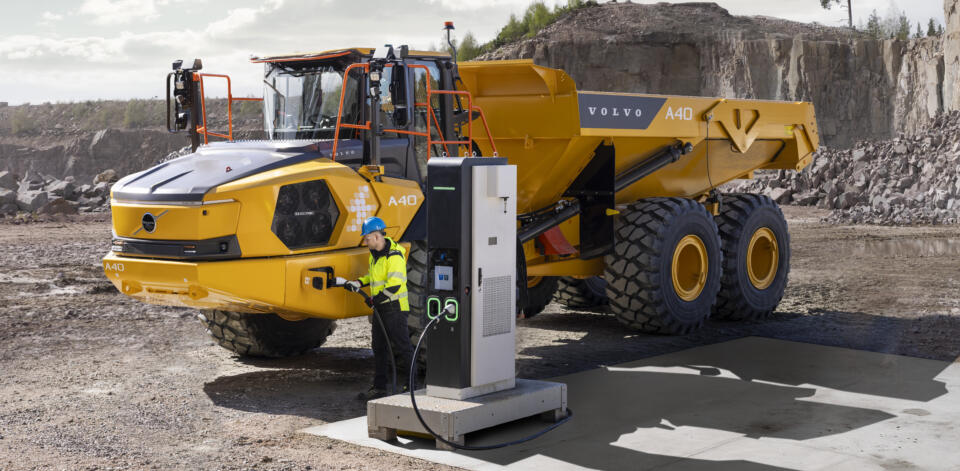
Until just a few years ago, construction sites were regarded as one of the last strongholds of internal combustion engines: noisy, dusty, diesel-powered. Heavy-duty excavators, wheel-loaders, and cranes would guzzle gallons of fuel while local residents had to put up with the noise and exhaust emissions. Across Europe, for example, 1.7 percent of all CO₂ emissions were attributed to activities on construction sites such as excavation work, crane movements, or materials handling. Yet the transformation toward more sustainability has been picking up pace in this area too.
Oslo, the “electric capital of the world,” is once again a trailblazer. As early as in 2019, the world’s first fully electric construction site was established for the repair of two streets. Since 2025, diesel power has been banned completely from municipal construction sites, at least in terms of fossil fuels, only biofuels are still being tolerated there. From 2030 on, the regulations are supposed to apply to private-sector construction sites as well.
The Swedish port city of Gothenburg was the site of a long-term project billed as “electrified construction site” from 2021 to 2023. 13 different actors demonstrated how electrified construction machines of various sizes can be integrated into smaller and larger-scale construction projects, structural and civil engineering, and snow removal services. The outcomes were positive in this case too. “In all tests, regardless of application and location, the electric machines performed as well as, if not better than, equivalent models with combustion engines, but without harmful emissions and disturbing noise,” said Bobbie Frank, Research Leader at Volvo Construction Equipment (CE), that was part of the project.
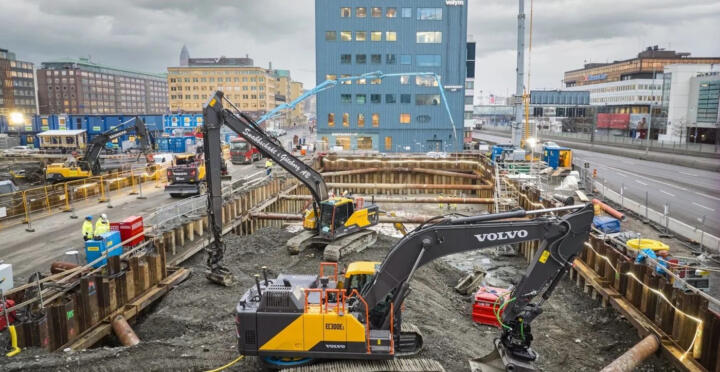
Following the Oslo and Gothenburg examples, further pilot projects have been implemented in the more recent past, having shown that electrified construction sites are no longer a pipe dream but common practice – with measurable economic and environmental outcomes, but with technical limits as well.
The world’s first fully electric deconstruction project
In 2025, just 15 kilometers (9 miles) from Schaeffler’s corporate headquarters in Herzogenaurach, on the premises of the Siemens Technology Campus in the Franconian university city of Erlangen, the world’s first fully electric large-scale deconstruction project became a reality. Five battery-electric Volvo CE machines were used in the deconstruction project: a compact excavator with a hydraulic hammer for precision dismantling of concrete and brickwork inside the building, a wheel loader for hauling off materials, a grid-bound material handler for outdoor work, and a chain excavator for demolition and concrete cutting purposes. The fleet was supported by a Husqvarna demolition robot and electric trucks from Volvo Trucks that hauled off the material. Energy was supplied by a transformer specifically installed to enable a direct grid connection with certified green electricity – making it possible to simultaneously fast-charge several machines while grid-bound equipment was continuously running.
Together with demolition specialist Metzner Recycling, three buildings with a volume of nearly 25,000 cubic meters (880,000 cubic feet) were deconstructed in a low-emissions process. For company owner Michael Metzner, the project marks tangible progress creating new potential. “The electrical equipment could enable urban projects that have so far been prevented by noise and environmental regulations,” says the expert.
Operationally, the technology impressed as well: Initial concerns of the machine experts were soon replaced by positive feedback on performance, responsiveness, and easy charging processes instead of often grimy on-site refueling.
Eleven electric machines plowing away in heavy-duty service in Oberhausen
A recently completed pilot project of construction corporation Strabag in Oberhausen, in which an in-house soil preparation facility was largely converted by means of electrical machines, the conclusion drawn was very positive as well, namely that the electrified technology was already suitable for use today.
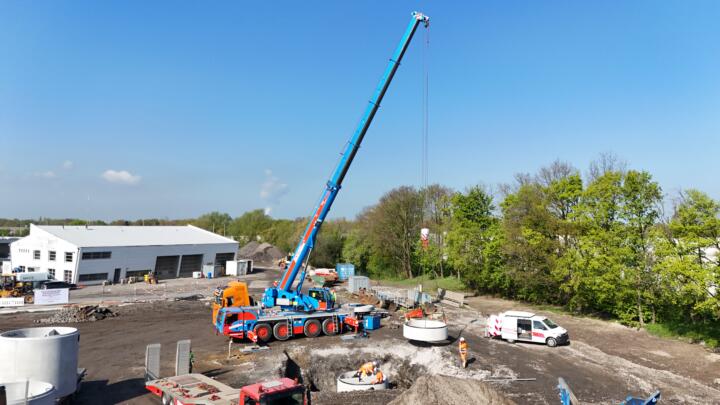
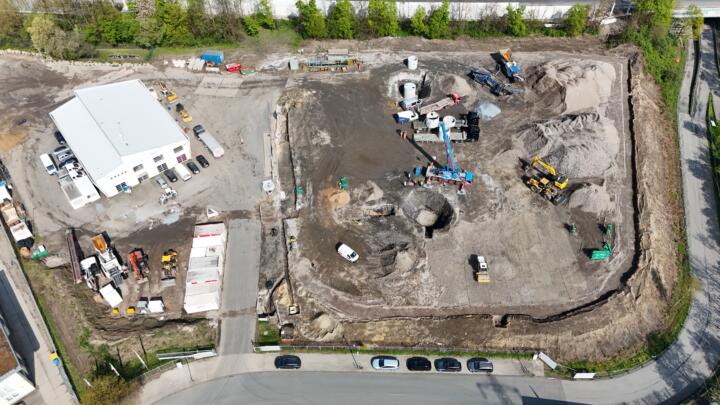
Strabag deployed eleven electrified pieces of large- and small-scale equipment in Oberhausen, including a 25-ton electric excavator, electric wheel loaders, and an electrically powered mobile crane. That Strabag ’s North Rhine Westphalian management was itself the construction client had the crucial advantage of enabling very agile response to unexpected events. In addition, there was direct feedback from the machine operators during the various construction stages, not just across one day but across weeks. “We were able to try out machines, gather experience – and when a solution was found not to be viable in any specific use case respond on short notice and switch to another machine,” said Strabag’s sustainability expert and responsible project manager Robert Kucza to “tomorrow” (see also interview below).
Surprisingly good but not perfect in every way
While a 6-ton wheel loader and a mobile 18-ton excavator lasted for one working day on one power charge and had to be recharged overnight, a mini excavator and a heavy-duty vibrating plate compactor were running out of “battery steam.” A 25-ton excavator occasionally had to be charged again during the lunch break as well. “That’s why it’s important for the charging infrastructure or a fast-charging option to be close-by for feasible access,” says Robert Kucza.
Charging states, charging times, and available power capacity: An electric construction site generally calls for completely different construction site planning than a conventional one – both in daily operation and in advance. Kucza clarifies, “That’s why electrification is not just a matter of exchanging the motor but also changes the workflow at a construction site.”
Schaeffler products for electrified and sustainable construction machines
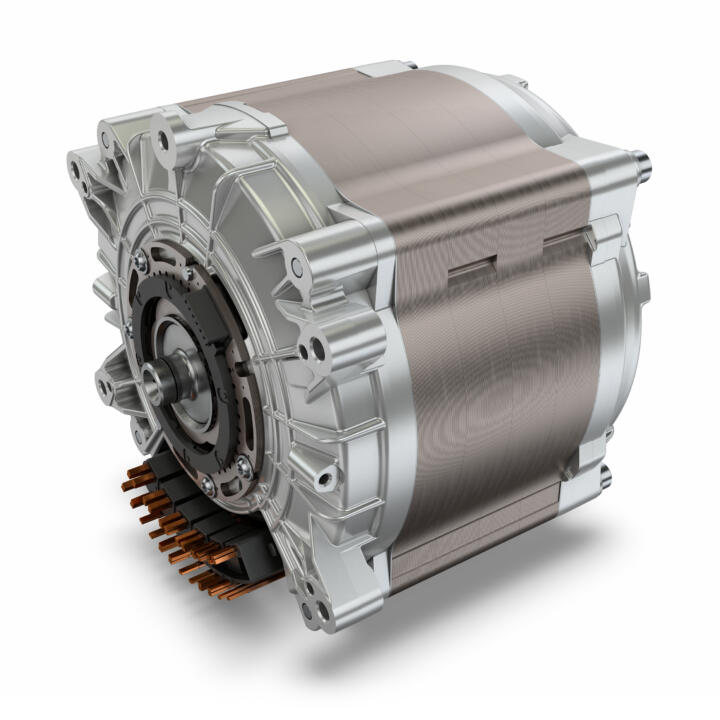
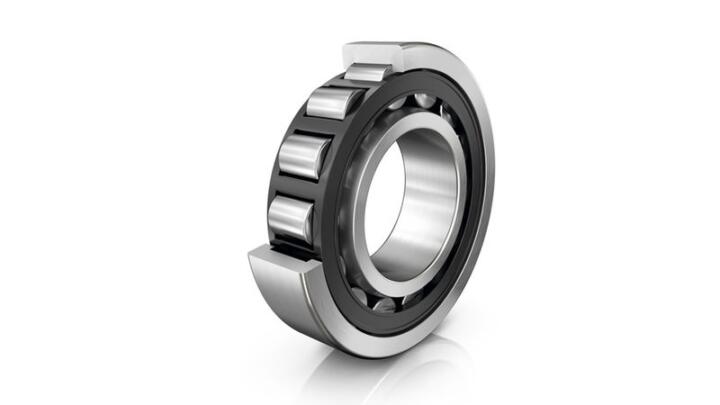
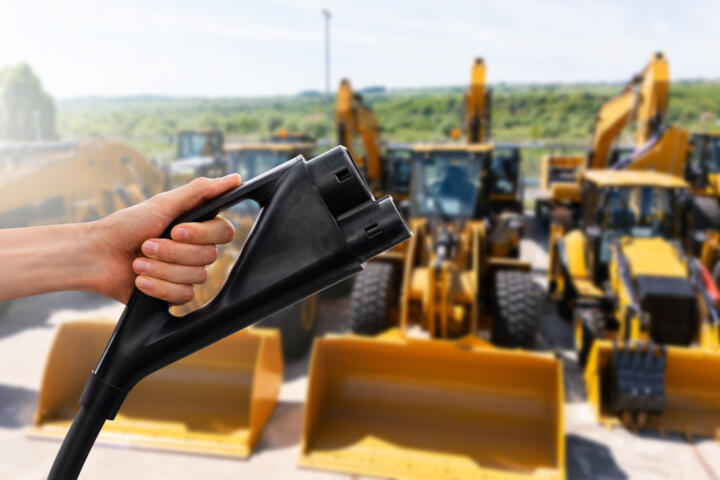
One of the major challenges when switching to another source of primary energy is posed by self-sufficient construction sites without power infrastructure. “But various approaches to that already exist as well, such as battery storage systems or swap batteries. Those solutions are not yet available across the board, though,” Kucza explains. For reliable energy supply in its pilot project, Strabag chose a three-pronged approach. A mobile 153 kWh energy storage device took care of peak loads, large-scale equipment was charged using fast-charging systems, smaller large-scale equipment such as wheel loads or mobile excavators were charged by means of a worksite power distributor. For small-scale equipment such as vibrating plate compactors and rammers, a separate charging container was available. Robert Kucza feels that “for self-sufficient construction sites without grid connections requiring very high amounts of energy or for longer distances, hydrogen might become an interesting complement.”
In Oberhausen, just like for several years in Oslo, biofuels such as the diesel derivative HVO100 are another alternative, both for applications that cannot (yet) be electrified and for making existing machines cleaner. However, Strabag expert Kucza sees clear advantages for battery-based electrification and, where feasible, for cable-bound power supply, especially due to anticipated better energy efficiency and lower maintenance costs. In the field test in Oberhausen, Strabag recorded around 90 percent lower energy costs versus a comparable “diesel-powered construction site” – a truly impressive achievement. The main reason is the clearly higher efficiency of the electric drive technology – an electric motor converts a far larger proportion of the energy it uses into actual mechanical power. In addition, there’s no energy consumption during downtimes when diesel engines keep running. The most recent heavy increases of fuel prices result in further improvements of the cost benefits of electric drives.
Despite economic and environmental benefits not all future construction sites are going to lend themselves to full electrification. Daniel Bachmann, CEO of Liebherr Energy Solutions, a subsidiary of the construction machine manufacturer specialized in energy and infrastructure solutions for the electrification of construction sites, agrees with that view as well. It’s necessary to plan with a technology-neutral mindset, simply because electricity isn’t always the right answer in the case of fundamentally different applications. His pragmatic recommendation is to start by looking at the operational reality and to let that determine the technology to be used – not vice versa.
Silent – sometimes even too silent
That electric construction sites produce less noise and exhaust emissions pleases not only local residents and the environment but construction workers as well. The better working conditions promote acceptance of the technology transformation among those that must work with the machines day in day out. Their low noise levels also facilitate communication at construction sites because workers don’t need to shout against engine noise. At the same time, a new safety scheme emerged as well: Because workers’ perception of the noise of approaching machines is impaired acoustic signals are supposed to indicate vehicle motion. That, however, should be no major challenge considering that such systems are already in use with other vehicle classes.
Conclusion: Ready for use but not yet a sure-fire success
Whether in Erlangen, where entire buildings were deconstructed without a single drop of diesel fuel, or in Oberhausen, where eleven electric machines proved their fitness for everyday use in full-load service, or in Oslo, where municipal construction sites have already been seeing “fossil-free” work, electrified construction sites have long gone beyond an experimental stage. In terms of performance, operating costs, and noise reduction, electric machines are already clearly scoring ahead of diesel-powered units – provided a suitable power supply is available.

“Initial skepticism has turned into clearly more differentiated assessments”
A short interview with Robert Kucza, electric construction site expert at construction corporation Strabag.
Mr. Kucza, you’re mentioning the limited availability of electric construction machines as a current hurdle against electrifying construction sites to a greater extent. What actions could accelerate a ramp-up?
“The offering is visibly expanding, but especially for larger machines it’s still incomplete. Some categories have just been available since recently or are being offered only by individual manufacturers or as rental solutions. That’s why we’re currently seeing an interaction between limited availability and still sluggish demand. For a ramp-up, both are needed: Manufacturers must offer sufficient numbers of suitable machines while construction companies and public clients must generate a corresponding demand. Especially public-sector invitations to bid could provide important impetus. Another opportunity would be to intensify the inclusion of climate factors or a carbon shadow price into the process of awarding contracts. In that case, not only the lowest price would be looked at but also what emissions and other environmental effects the execution of the project would entail. In my view, that would enable a fair competition between conventional and alternative drive systems. Transparency and measurability of those criteria are decisive.”
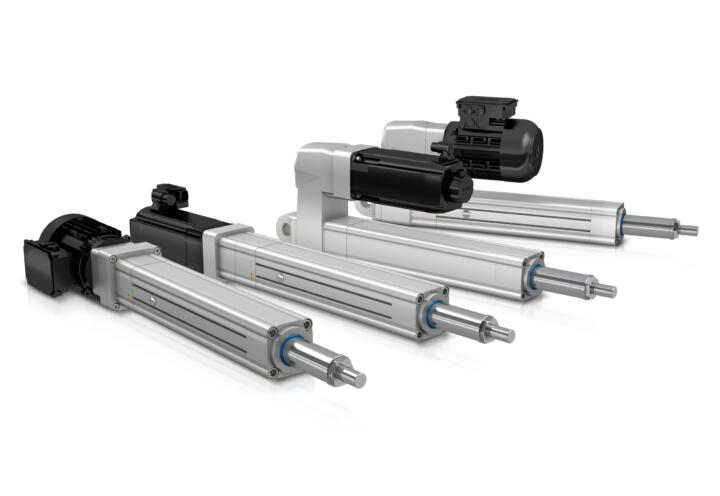
Besides drive motors hydraulic actuators could be “energized” by linear electric drives, an area in which Schaeffler is very active too. What’s your assessment of that?
“I consider the electrification of actuators a very interesting next development step. There’s a lot of talk about the electrification of drive motors but hydraulics causes conversion losses as well. In addition, noise development can be reduced. I’m excited to see where electric actuators will be used.”
Looking ten years ahead: What do you think a typical construction site is going to look like then? What will be the proportion of electric machines in it? And what will be the role of other technologies and digitalization?
“I’m convinced that electric machines are going to be completely normal on many construction sites in ten years from now – just like small electric devices or cars are already commonly used today. In parallel, digitalization and automation are going to clearly gain traction in everyday construction settings. Examples that come to mind include automatic detection of hazardous areas, machines that can directly execute digital job orders, or sensors performing surveying and quality tasks. Plus, I’m excited to see when individual automated functions will lead to truly autonomous or robotic construction site processes.”